
Roof Rat Removal in Fort Lauderdale, FL
Scratching over a Fort Lauderdale ceiling after dark is almost always a roof rat that came up the sea wall or a palm and slipped under the tile eave. Licensed contractors handle every routed job.
What roof rat removal covers on a Fort Lauderdale property
Roof rat removal here runs as one program with four parts: a free inspection that walks the roofline, the attic and the water side of the lot, sealing of every opening found, snap trapping inside the attic, and a return visit before the job is signed off. Each part is its own line on the quote.
The species sets the order. A roof rat arrives at the top of the house and nests in the attic, so trapping alone leaves the doorway open for the next one off the dock. The contractor we route closes the roofline first, or in the same visit as the traps, and comes back to confirm the attic has gone silent.
- A no-charge rodent inspection of the eave, soffits, vents, attic, exterior walls and, on a canal lot, the sea wall and dock line, with written findings
- Rodent exclusion with bird stops at the tile eave, galvanized hardware cloth at soffit returns and vents, and sheet metal at fascia gaps and line-set penetrations
- Snap traps set on the dropping runs in the attic, checked on a schedule, every carcass taken away
- A verification visit looking for new droppings, fresh gnawing and any sound reported since
- Optional attic cleanup, insulation replacement and dead rodent removal, each priced on its own line
People who have lost a week of sleep to the noise are often told by friends that it is a lizard or the house settling. It is worth describing exactly what you hear, where in the house and at what time, because that description places the first traps.

Work out roughly what this costs in Fort Lauderdale
Six questions against the national cost bands printed further down the page. The range is wide on purpose, because the roofline and the rear of a canal lot are the two biggest variables and neither can be priced from a form.
Bands come from HomeGuide 2026 national guides. Every figure is confirmed at the free inspection, and the quote arrives with trapping, sealing and cleanup on separate lines.
Why the sea wall and the dock line feed the attic
On a Fort Lauderdale canal lot the roof rat usually comes from the rear, along the sea wall cap and the dock line, then up a piling, a boat lift cable or a hedge into the palms and onto the roof. The city counts roughly 165 miles of navigable waterway, and every canal-front property has a back edge the owner rarely looks at from the outside.
The water side of the lot carries everything the animal wants. The sea wall cap is a dry, level runway. Dock lines and lift cables are bridges from a neighbor's property. Mangrove and sea grape hedges along the wall give cover, and a boat on a lift or under a canopy stores rope, fenders and food wrappers. From there, a coconut or royal palm with fronds near the eave finishes the trip.
UF/IFAS describes the roof rat as arboreal, moving along branches, wires and palm trunks, and gives its range as about 150 yards from the den. On a finger island that radius covers a dozen houses on both sides of the canal, which is why one sealed roofline holds while an unsealed one refills. Norway rats show up at this same rear edge, burrowing behind the sea wall and under the dock apron, and they stay at ground level. The neighborhood pages for Las Olas Isles and Lauderdale Isles go further into canal-front layouts.
Roof rat, Norway rat or house mouse: telling them apart
The roof rat is behind nearly every attic call in Fort Lauderdale, and UF/IFAS calls it the worst and most abundant rodent pest in Florida. An adult measures 12 to 14 inches from nose to tail tip, with the tail longer than the head and body combined, which is the quickest field mark against the heavier Norway rat.
| Species | Where it turns up in Broward | Field marks | Sound and timing |
|---|---|---|---|
| Roof rat | Attics, tile eaves, palms, fruit trees, sea wall caps, dock lines, service wires | Slender, 12 to 14 inches overall, tail longer than body; droppings a quarter to half inch, curved like a small banana with pointed ends (UF/IFAS) | Light, fast footfalls over the ceiling after dark |
| Norway rat | Burrows behind sea walls, dumpster enclosures, older commercial blocks, marina and port-adjacent property | Heavier body, blunt muzzle, tail shorter than head and body; stays at ground level | Ground floor, garages and dock areas at night |
| House mouse | Kitchens, garages, wall voids; a minority of calls here | Small, generic; droppings far smaller than a roof rat's | Inside walls and cabinets, mostly after dark |
Droppings decide most disputes. The roof rat leaves a dropping a quarter to a half inch long, banana shaped and pointed at both ends, which is the one dropping measurement in this trade with a university source behind it. Where two people disagree over a young roof rat and a mouse, the tail proportion and the dropping shape settle it during the inspection.
Signs of roof rats in a Broward attic
A scamper across the ceiling once the house goes quiet, droppings on top of the attic insulation, and mangoes or avocados on the lawn with a hole chewed in one side are the three signs that put Fort Lauderdale homeowners on the phone. Any one of them justifies the free inspection.
- Scratching, running or a rolling sound overhead between dusk and dawn, loudest during the November to February cool snaps
- Droppings along the top plate, on the insulation, or on the garage floor under the attic access
- Gnaw marks on soffit edges, vent screens, the foam on the AC line set, or wiring
- Greasy rub marks on a rafter or around the edge of an opening, left by a coat on a repeated route
- Insulation tunneled into runs or pulled into a mound near the air handler
- A musky odor at the attic hatch or in a closet below the attic
- Fruit on the ground with a clean hole and the flesh gone, or citrus peeled from the inside
- Droppings or chewed rope along the dock, on the boat lift beams or on top of the sea wall
Fruit season stretches most of the year in Broward yards. Mango and avocado drop through summer, guava and starfruit through fall, citrus through winter, so there is no month when the food supply shuts off. That is one reason a roof rat population found in January has usually been in the attic since the summer rains.
The tile eave, the bird stop and the palms
Most roof rats enter a Fort Lauderdale attic through the open course under the first row of barrel tile, and the component meant to close that course is called a bird stop or eave closure. It is a code-approved metal strip, typically 26 gauge galvanized steel or aluminum, sometimes ventilated with weep holes, and the Department of Energy lists installing bird stopping among its recommended measures for tile roofs. When it is missing, corroded or displaced, the eave becomes a rat-sized slot running the full length of the house.
The palms and fruit trees supply the ladder. Royal, queen, sabal, Washington, date and coconut palms are all common on Broward lots, and a frond or limb within about six feet of the roofline is the route onto the tile. Mango, avocado, citrus, guava, sapodilla and starfruit put the food within the same six feet. Once the animal is on the roof, the same weak points get tested on almost every house in the city.
- The open eave course under the first tile row where the bird stop is missing or has rusted through
- Soffit returns and original soffit screens that have torn or been pushed up
- Gable vents and off-ridge vents with plastic or light wire mesh
- Ridge caps with no screening under them
- Fascia boards that have pulled away from the roof deck with age and sun
- The AC line-set penetration, cracked plumbing vent boots, cable and electrical mast entries
The sealing standard is a quarter inch. UF/IFAS gives that as the rat-proofing figure because a mouse passes a quarter-inch gap and a rat a half-inch one, so the smaller number governs. In Victoria Park, Rio Vista and Poinsettia Heights the fascia, soffit screens and tile are often original to houses from the 1920s through the 1960s, and the gaps are wider for it. The exclusion page covers each closure and the materials that hold.
Is it safe to do exclusion before trapping?
Sealing first is safe and it is the professional sequence, provided the animals already inside are trapped in the same program and the last opening is closed with a one-way door or a trap on the run. What goes wrong is sealing with nothing set inside, which locks the rats in and sends them chewing into the living space.
| Method | What it achieves | Where it breaks down |
|---|---|---|
| Bait stations only | Kills part of the current population over days to weeks | The eave stays open and refills from the canal; poisoned rats die inside the roof |
| Trapping only | Removes what is in the attic now | The next rat off the sea wall uses the same hole; homeowners in forums call it harvesting |
| Sealing only | Closes the roofline | Animals inside are trapped in the structure and chew out through drywall or wiring |
| Sealing with trapping | Closes the openings, removes the occupants, then verifies | Higher first quote; usually ends the problem in one program |
The poison question comes up on nearly every call because bait-only plans are the cheapest first quote. The EPA notes that most rodenticides are anticoagulants and that death typically follows four days to two weeks after the animal begins feeding. A rat that feeds in an attic and nests in an attic dies in that attic or a wall void, and the claim that poison makes rats thirsty so they leave to die outdoors is folklore. UF/IFAS adds that trapping reduces the risk of a poisoned rat dying inside a building. The EPA has also pulled second-generation anticoagulants from consumer shelves and restricted them to tamper-resistant stations in residential settings, so any bait beyond the hardware-store tier is a licensed-operator product placed under label rules.
Foam is the other shortcut to avoid. A blob of expanding foam in an open eave course is chewed through in a night, while a fitted metal bird stop, quarter-inch galvanized hardware cloth and sheet metal stay in place through storm season.
How long does it usually take to get rid of rats?
A small population with the roofline closed is typically finished within days, and a heavy, long-established one takes one to two months. HomeGuide puts trapping a few animals at two to three days and a severe infestation at one to two months, and the Broward jobs that overrun those figures are nearly always the ones where nothing was sealed.
Roof rat biology sets the pace. UF/IFAS reports that in Florida the species breeds year-round, reaches sexual maturity at three to four months, carries for 21 to 23 days and produces litters of five to eight, four or five times a year. Fort Lauderdale winters are warm enough that the cycle never pauses, so a pair that arrived with the June rains is a colony by the time the cool snaps make them audible. UF/IFAS also notes that roof rats are wary of new objects, which is why traps stay in place for at least a week before anyone moves them.
The multi-month stories in homeowner threads share one detail: a company returning to refill bait with no sealing on the invoice. Ask on the first visit what has been closed and with what, and see the about page for what the routed contractors put in writing.
What roof rat removal costs in Fort Lauderdale
Trapping and removal runs $250 to $1,200 nationally in HomeGuide's 2026 data, with full-home exclusion at $500 to $2,500 on top, and a Fort Lauderdale quote usually lands inside those bands with the tile eave pushing exclusion toward the upper end. These are national typical-job bands; the free inspection produces the itemized local figure.
| Line item | National band (HomeGuide 2026) |
|---|---|
| Standalone inspection | $0 to $175 (free here) |
| Trapping and removal | $250 to $1,200 |
| Full-home exclusion | $500 to $2,500 |
| Attic cleanup and decontamination | $600 to $2,500 |
| Insulation removal and replacement | $2.50 to $5.50 per sq ft |
| Dead rodent removal | $150 to $500 |
Four things move a Broward roof rat quote inside those bands. The length of eave that needs a bird stop, since a tile roof has to be closed end to end. The number of vents, soffit returns and penetrations found open. How long the animals have been in the attic, which sets the trapping schedule. And whether the insulation has to come out. The national guides also price crawl-space and basement work that a slab-on-grade Fort Lauderdale house does not have, so a local quote for the same scope can come in under the national spread. Ask separately whether a monthly monitoring contract is folded into the number.
Fort Lauderdale seasons, storms and who may do the work
Fort Lauderdale has no rodent off-season, because the winters never get cold enough to stop roof rats breeding and the yards never stop producing fruit. Demand moves with the weather instead: heavy summer and hurricane-season rain from June through November pushes animals indoors, and the cool snaps from November to February make attic activity loud enough to notice, which is when calls peak.
After a storm
Broward took Wilma in 2005 and Irma in 2017, and Fort Lauderdale saw a record rainfall flood in April 2023. Storms open houses to rodents through mechanisms: wind lifts tiles and tears soffits, the Department of Energy documents one broken tile cascading into others, debris piles become harborage, and flooding drives rats to high ground and attics. The CDC links rises in leptospirosis cases to hurricanes and floods, lists rodents among the reservoirs, and recommends rodent control as post-flood prevention. A post-storm rodent inspection covers that window.
The FDACS credential
Trapping rats or mice in, on or under a structure for hire in Florida requires at minimum an FDACS Limited Commercial Wildlife Management certificate, and applying rodenticide or running a general pest business requires an FDACS pest control business license with a certified operator in General Household Pest and Rodent Control. FWC does not license rat and mouse trappers. Every contractor we route holds the FDACS credential the job needs, and you can look the license number up with FDACS before work starts.
Five checks before the ladder goes up
Five questions separate a job that ends from one that drags on, and whoever attends should answer all of them on the first visit.
- Ask for the FDACS license number and check it in the state lookup.
- Have the quote broken out line by line: inspection, sealing, trapping, cleanup, and any ongoing service.
- Ask what will be closed, with what material, and whether the eave gets a fitted bird stop or foam.
- Ask what warranty terms apply to the sealing, whether the term renews, and what happens if activity returns.
- Ask how many follow-up visits are included and who removes the trapped animals.
The contact page is the place to put those questions before anyone comes out.
The services that usually run alongside this one
A Broward rodent job is a sequence of separate lines, and these are the pages that cover the steps on either side of this one.
- Rodent Exclusion: Closing the tile eave with a bird stop, then the soffits, vents and penetrations, to the quarter-inch standard.
- Rodent Inspection: A free walk of the roofline, attic, exterior and dock line that sets the order of the job.
- Attic Cleanup: Removing droppings and soaked insulation from a hot vented attic, then sanitizing it.
How the pieces fit together, and which license to look up, is covered on the about page. The contact page has the hours and the office address.
What a brown rat is
Background on the species and how it lives.
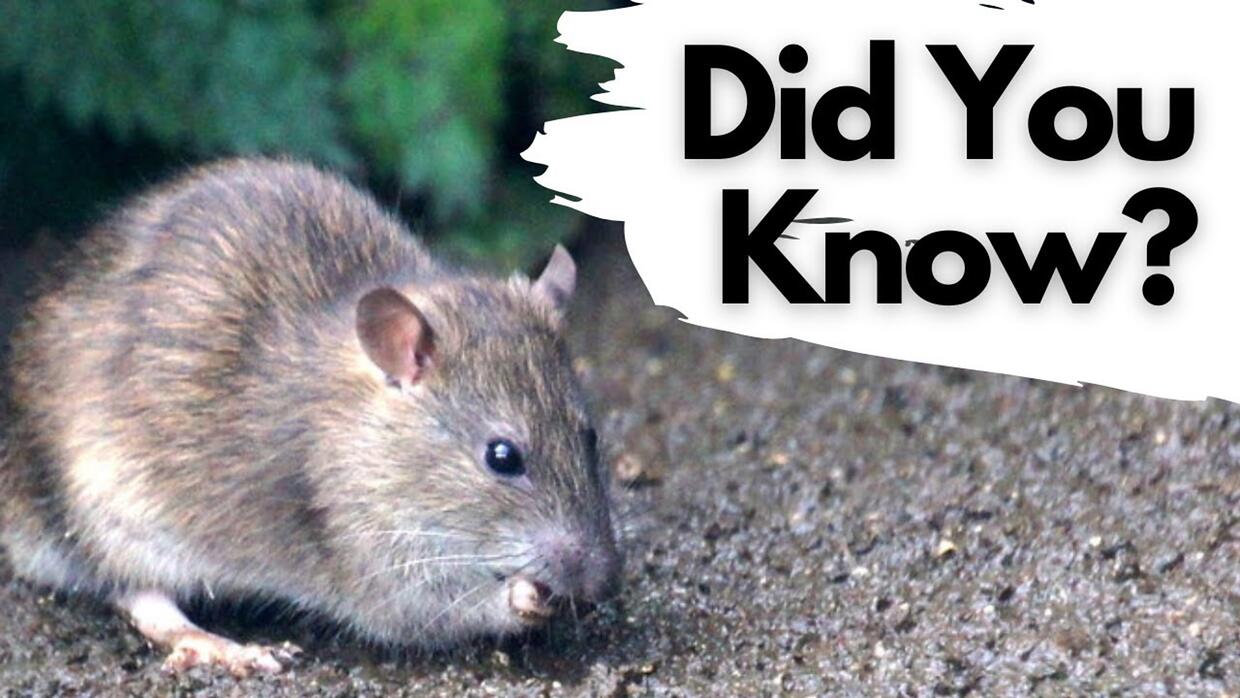
Video: Things you need to know about brown rats, from A Shot Of Wildlife.
How a roof rat job runs in Fort Lauderdale
Sealing the roofline is the spine of the job; trapping, verification and cleanup attach to it.
-
Free inspection
Whoever attends walks the eave from a ladder, checks the attic with a light, and on a canal lot follows the sea wall and dock line. Findings come in writing.
-
Eave and roofline closed
Bird stops are fitted along the tile eave, and every other opening over a quarter inch gets galvanized hardware cloth or sheet metal. This step stops the next rat.
-
Traps on the runs
Snap traps go on the dropping runs in the attic and stay at least a week, since roof rats avoid new objects. Every carcass is removed on schedule.
-
Verification visit
A return trip checks for fresh droppings, new gnawing and any noise reported since. Any opening that was missed gets closed on the spot.
-
Cleanup if wanted
Soiled insulation, odor and chewed wiring are quoted as separate work once the attic is confirmed empty, so you can decide each item on its own.
Why Fort Lauderdale homeowners route roof rat work through us
Three things hold on every job we route, and each one has a checkable figure or credential behind it.
A fitted bird stop at the eave instead of foam
The contractor we route closes the tile eave with a fitted metal bird stop and measures every other opening against the quarter-inch rat-proofing standard from UF/IFAS. Foam and steel wool alone are chewed out within days, and the list of what was closed, where and with what goes on paper before the traps are set. Trapping without sealing is the most criticized practice in homeowner forums, and every routed job is built to avoid it.
Department of Energy: bird stopping is a recommended tile-roof measure
Free inspection, itemized quote
The inspection costs nothing, including the walk along the sea wall and dock line on a canal lot, and the quote that follows is split into inspection, exclusion, trapping, cleanup and any ongoing plan. National cost data prices a standalone rodent inspection as high as $175, and homeowners in forums describe paying around $75 for a bid. Here the cost of finding out what is wrong is zero.
HomeGuide 2026: standalone rodent inspection $0 to $175 nationally
FDACS credential on every routed contractor
Trapping rats inside a Florida structure for hire is regulated by FDACS, and every contractor we route holds the credential the job calls for: a Limited Commercial Wildlife Management certificate at minimum, or a pest control business license with a certified operator where bait is involved. The license number can be looked up on the FDACS site before anyone sets a ladder against the eave, and you are encouraged to do that.
FDACS Limited Commercial Wildlife Management certificate, checkable in the state license lookup
Turn the estimate into a quote
Send the address and what you are hearing. The inspection that prices the job is free, and the quote arrives with trapping, sealing and cleanup on separate lines. The phone is picked up day and night.
What Reddit Says About Roof Rat Removal in Fort Lauderdale
Homeowners on r/pestcontrol and r/HomeImprovement vet a rat company by collecting several bids for identical scope, because a single quote on its own tells them nothing. They want the price split into trapping, sealing and cleanup, they say out loud that they prefer a local operator to a national brand, and they ask early whether the company does repair work or only sets traps. Inspection fees are a sore point, with people describing about $75 paid just to receive a bid.
Their red flags repeat across threads. A poison-only plan with no sealing is the top one, and anyone who says poison makes rats thirsty so they go outside to die is treated as dishonest. Quotes that fold a long monthly monitoring contract into the removal price draw the same reaction, as do companies that come back month after month with nothing changing. Both opposite mistakes get named: sealing with animals still inside, and trapping with nothing sealed, which one commenter describes as harvesting rodents.
The questions they pass to each other are short. What exactly is included and what is a separate line? Is the sealing warrantied, and does the warranty renew or end? Will you clean and decontaminate or only trap? How many follow-up visits are included? What happens if they come back? Under all of it sits price anxiety, with similar-sounding jobs quoted from under two thousand dollars to tens of thousands and the recurring question being whether they are being taken advantage of.
The Florida threads add the local detail that matches Broward: palm fronds and overhanging limbs as the roof rat highway, sheet-metal collars on tall palms, barrel-tile eaves and soffit gaps as the entry points, and one infestation traced to the aftermath of Irma. The tone is heavier than most trade forums, with sleep loss and being brushed off as dramatic coming up again and again.
Every contractor we route is expected to answer that list on the first visit, in writing.
A common roof rat call on the Las Olas Isles
The situation: A couple in a 1960s single-story house on one of the finger islands hear a light run over the primary bedroom about an hour after they turn in, most nights from late November. A neighbor says it is a gecko. The lot backs onto the canal with a sea wall, a dock and a boat on a lift, a coconut palm leans toward the rear eave, and a mango tree by the wall dropped fruit all summer with chewed sides. One of them has started sleeping on the sofa.
What gets done: Whoever attends finds droppings a quarter to half inch long along the top plate above the bedroom, an open eave course with the original bird stop rusted away for several feet near the palm, and rub marks up a dock piling and along the sea wall cap. The eave gets a fitted metal bird stop for its full rear length, the soffit return at the corner gets quarter-inch galvanized hardware cloth, the palm frond is flagged for trimming back from the roof, and snap traps go on the run for a full week. The quote lists exclusion, trapping and a follow-up visit separately.
How it turns out: The traps take several adults in the first ten days and then stay empty. The return visit finds no new droppings and no fresh gnawing, the owners get a written list of what was closed and where, and the mango tree keeps its fruit the next summer. Insulation replacement is quoted on its own line and left for later.
Roof rat questions from Fort Lauderdale homeowners
These come up most often on the phone and in homeowner threads.
Working out what you have
How do I know if it is a rat or a mouse in the attic?
Measure the droppings and think about where you are. A roof rat dropping runs a quarter to a half inch, curved and pointed at both ends, per UF/IFAS, and the animal itself is 12 to 14 inches with a tail longer than its body. Mouse droppings are much smaller. In Fort Lauderdale the odds favor the roof rat heavily, since house mice are a minority of calls and rarely nest in a hot vented attic. The free inspection settles it, and the species decides where the traps and the sealing go.
Should I worry about hantavirus from the droppings?
Florida's identified hantavirus reservoir is the native cotton rat, an outdoor field species, and most cases in the United States occur in the western states, so a Broward attic full of roof rats is a low hantavirus risk. The droppings still deserve respect. Per the CDC, the diseases rodents carry pass to people directly, by way of urine, droppings, saliva and bites, and indirectly by way of fleas, ticks and mites that have fed on an infected animal. A respirator and gloves during cleanup are the right call on general contamination grounds, which is why attic cleanup is its own job.
Is one rat sighting a whole infestation?
One sighting in a Fort Lauderdale attic usually means several animals, because the roof rat breeds through every month of the year here. UF/IFAS gives maturity at three to four months, a 21 to 23 day gestation and litters of five to eight, with four or five litters a year. A rat seen in December has probably had company since the summer rains. The inspection reads droppings and rub marks to estimate how long the attic has been occupied, and that estimate shapes the trapping schedule.
Getting them out and keeping them out
What keeps rats away permanently?
A closed roofline does, and nothing else holds an attic against an animal that arrives from the dock and the palms. Every opening a quarter inch or larger gets a bird stop, galvanized hardware cloth or sheet metal, fronds and limbs get cut back six feet from the roof, fallen fruit gets picked up, and dock lines and rope get stowed. Repellent devices and cats do not stop a rat that ranges about 150 yards from its den, per UF/IFAS, so the neighbor's yard can supply the food while your roof supplies the nest. The sealing is what ends it.
Will the contractor use poison in my attic?
Trapping is the default in a Fort Lauderdale attic, and the contractor we route explains any alternative before using it. The EPA describes most rodenticides as anticoagulants that take four days to two weeks to kill after feeding starts, so a rat baited in an attic tends to die in the attic or a wall, and UF/IFAS notes that trapping cuts that risk. Where bait is used at all, it goes in a tamper-resistant station under label rules, and applying it requires an FDACS pest control business license with a certified operator. Ask which approach is on the quote and why.
Will they come back after the job?
They come back if the roofline is left open or the yard keeps the ladder in place, and they stay gone if it is closed and kept closed. Ask whoever attends what warranty terms cover the sealing, whether the term renews and what a return visit costs. Keep palm fronds and limbs six feet off the roof, pick up fallen fruit, and glance along the sea wall and dock line every few months for droppings. A roof rat can get onto a roof from the neighbor's tree; it can only get into the attic through an opening that was left for it.
Still have a question? Call (954) 790-6402 and ask.

Book a free roof rat inspection in Fort Lauderdale
Call (954) 790-6402 or send the form. The line is answered at any hour and the inspection costs nothing.