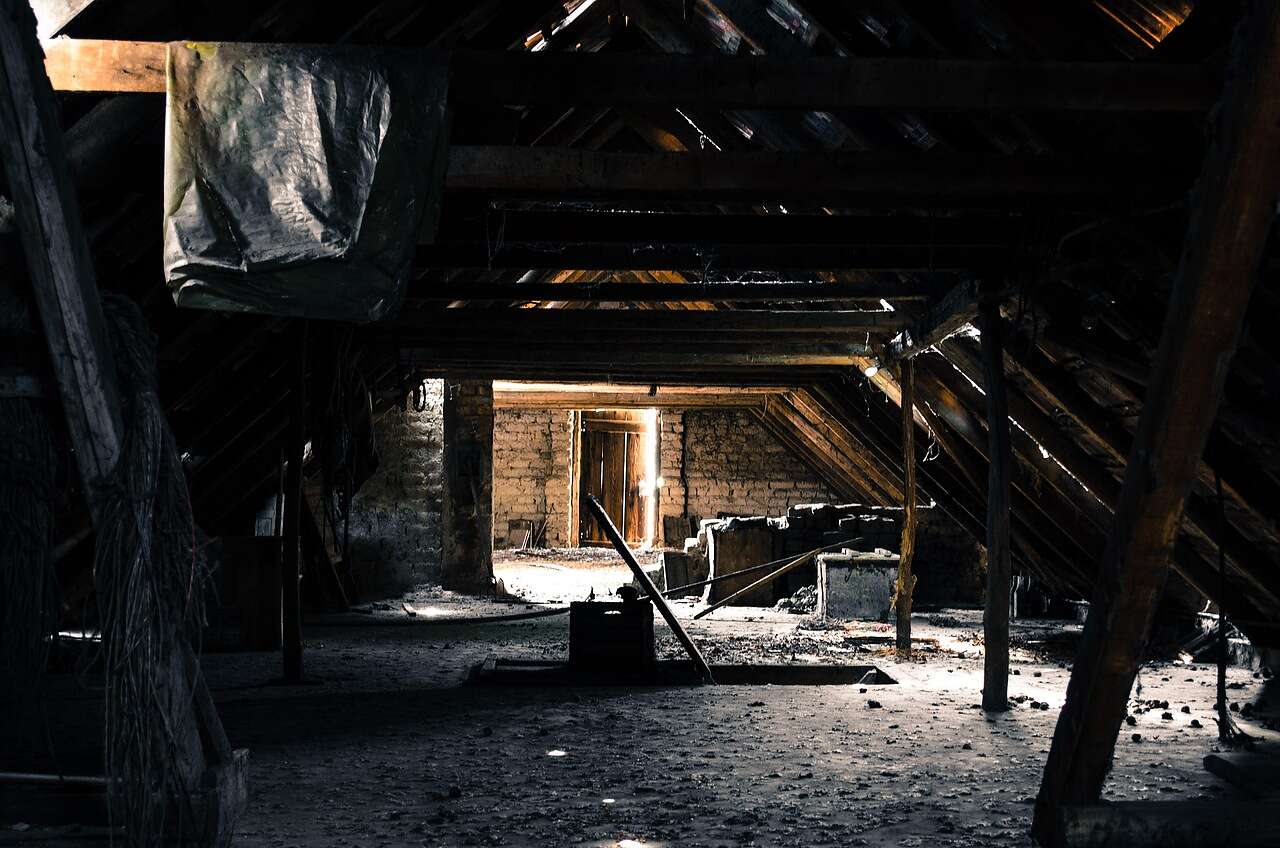
Dead Rodent Removal in Fort Lauderdale, FL
The smell filling a Fort Lauderdale hallway a week after the bait went down is a rat that died in the wall. Licensed contractors handle every removal we route, and the eave gets closed.
What dead rodent removal covers in Fort Lauderdale
Dead rodent removal in Fort Lauderdale means locating a carcass inside a wall, ceiling or attic by smell and by the flies, opening the smallest access that reaches it, taking it out with the nest material around it, deodorizing the cavity, and closing both the access cut and the roofline opening that let the animal in. It is quoted as its own line so the cost is visible apart from any trapping or sealing that follows.
Most of these calls in Broward arrive one to three weeks after a bait-only plan. The animal fed in the attic, went back to its nest in a wall or over a ceiling, and died there. Removing the carcass fixes the smell; it does nothing about the open eave or the rest of the colony, which is why the contractor we route treats the removal as the start of an exclusion job and quotes the two on separate lines.
- A walk of the house to narrow the location by smell strength, fly activity, warm spots and the layout of wall cavities and ceiling bays
- An inspection camera through an outlet or a small pilot hole where the location is uncertain
- An access cut in drywall, a ceiling or a soffit sized to the job, or retrieval from the attic side where the carcass is reachable
- Removal of the carcass, the nest and any soaked insulation in the cavity, bagged and carried out
- An enzyme or oxidizing deodorizer applied to the cavity and the framing, and a treatment for the maggots and flies that follow a carcass
- The access closed and patched, and the entry point at the roofline closed with metal (see rodent exclusion)
The smell makes people feel that the house has turned on them, and by the second week most have stopped inviting anyone over. That reaction is normal. The carcass is a fixed problem with a fixed location, and finding it is the whole skill.
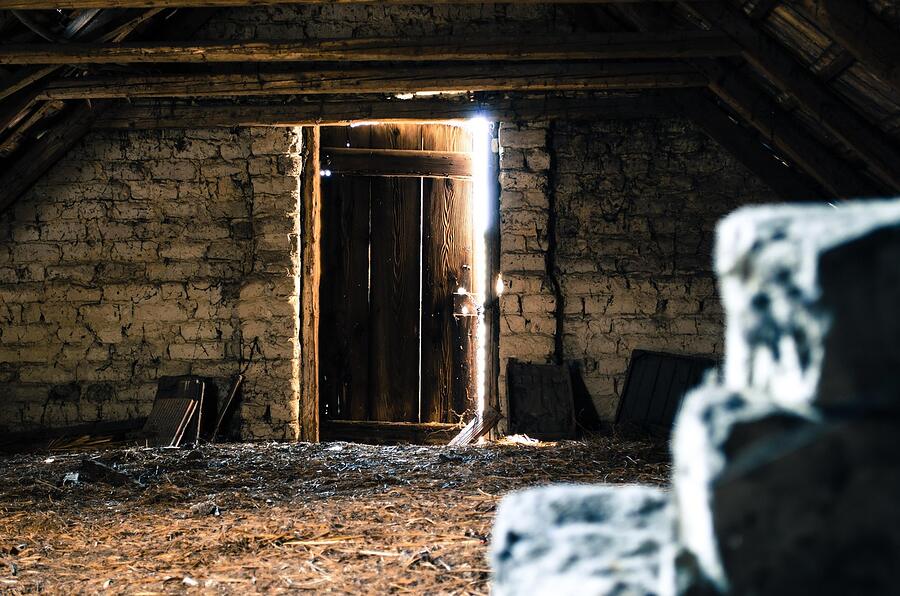
Signs there is a dead rat in the wall or ceiling
A sweet, heavy smell that started suddenly and grows stronger for several days is the sign of a carcass, and a small cloud of flies at one window or one ceiling fixture is the sign that tells you where. Contaminated insulation smells sour and steady; a dead animal smells different and moves through a curve.
- A smell that appears over a day or two, peaks over one to two weeks, then slowly fades over a month or more as the carcass dries
- Strongest in one room, one closet or one stretch of hallway, and stronger when the air conditioning cycles on
- Large slow flies at a window, a ceiling fixture or an outlet, often the first solid evidence of the location
- Maggots appearing at a baseboard, a light fixture or a ceiling seam under the carcass
- A stain spreading on a ceiling or at the top of a wall, where fluids have soaked into the drywall
- A recent bait plan with no sealing, and the scratching that stopped a few days before the smell began
Heat shortens the curve and sharpens the peak. A Fort Lauderdale wall cavity or attic in summer runs hot and humid, so a carcass breaks down faster and smells worse over a shorter period than the same animal in a cooler climate, and the flies arrive sooner. In winter the curve is longer and flatter, which is why a January carcass sometimes gets blamed on a drain.
Does poison make rats go outside to die?
Poison does nothing to send a rat outside, and the line about bait making rats thirsty so they leave the house to find water is folklore. A roof rat that feeds at a bait station in the attic goes back to its nest in the attic or the wall, and that is where it dies. Homeowner threads treat any company still repeating the thirst story as a warning sign.
The timing is on the EPA label. Most rodenticides are anticoagulants, and the EPA describes death as typically coming four days to two weeks after the animal starts feeding. That window is why the smell shows up a week or two after the bait went down and why the scratching stopped a few days before it. The EPA has also withdrawn second-generation anticoagulants from consumer products and restricted them to tamper-resistant bait stations, so in a residential setting the stronger baits are licensed-operator products placed under label rules, and their use in Florida requires an FDACS pest control business license with a certified operator.
There is a practical reason UF/IFAS favors trapping: a trapped rat is removed, while a poisoned one may die somewhere inside the building. A trapped animal is removed at the next check. A baited animal picks its own place to die, and inside a sealed wall cavity is a common pick.
Removal approaches compared
The approach depends on where the carcass is and how sure the location is, and the choice shows up in the size of the patch left behind.
| Approach | What it does | Where it fits |
|---|---|---|
| Retrieval from the attic | The carcass is reached from above, over a ceiling or at the top plate of a wall, with no cut in a finished surface | Ceiling bays and wall tops that are open to the attic, the common case in a single-story Broward house |
| Access cut through drywall | A small opening at the point of strongest smell, sized to the job, patched afterward | Mid-wall carcasses, two-story houses, and cavities blocked by fire stops or plumbing |
| Camera through an outlet or pilot hole | An inspection camera confirms the cavity before anything is cut | Where the smell is spread across several rooms and the location is uncertain |
| Deodorizer only, no removal | Masks or partly neutralizes the odor while the carcass stays in place | A last resort where the cavity cannot be reached; the smell returns on hot days until the animal dries out |
A deodorizer sprayed into an outlet with the carcass still in the wall is the cheap quote in this service, and it is the equivalent of foam in a soffit gap. Ask where the animal is and how it is coming out.
How long does a dead rat smell last?
A dead rat smell in a Fort Lauderdale wall lasts several weeks and can run past a month in the cooler months, with the peak in the first two weeks, and it ends within a day or two of the carcass being removed and the cavity treated. Waiting it out is possible; it is also the option that leaves fluids in the drywall, maggots in the cavity and the entry point open.
Size and heat set the length. A single adult roof rat, 12 to 14 inches including the tail per UF/IFAS, dries out faster in a hot attic than in an interior wall, and a nest of juveniles that died together after a bait plan holds the smell longer than one animal. A carcass sitting on wet insulation under a lifted tile takes the longest of all.
The flies are the other clock. Blow flies find a carcass within hours in a warm climate, and the maggots that follow are what most people find at the baseboard a week later. Removing the carcass and treating the cavity ends both, and closing the access and the roofline opening keeps the next one out.
What dead rodent removal costs in Fort Lauderdale
National cost data brackets dead rodent removal at $150 to $500 for a typical job, with the low end covering a carcass reached from the attic and the high end covering a wall cut, patch and deodorizing. HomeGuide 2026 supplies those figures and they are national; there is no Fort Lauderdale-specific survey, and the free inspection produces the itemized number for your house.
| Line item | National band (HomeGuide 2026) |
|---|---|
| Dead rodent removal | $150 to $500 |
| Trapping and removal | $250 to $1,200 |
| Full-home exclusion | $500 to $2,500 |
| Attic cleanup and decontamination | $600 to $2,500 |
| Standalone inspection | $0 to $175 (free here) |
What moves a Broward quote inside the band: whether the carcass can be reached from the attic or needs a cut, how many animals died, whether the cavity holds soaked insulation that has to come out, the finish being cut (painted drywall versus tile or a textured ceiling), and how certain the location is. Drywall finishing and repainting after the patch are sometimes a separate trade and a separate line.
The number to watch is the one that follows. A carcass after a bait plan means the colony and the open eave are still there, so ask for the trapping and the exclusion as separate lines beside the removal, and ask whether a monitoring contract is bundled in. On a tile roof the exclusion line runs long because the whole eave course has to be closed, and on a slab-on-grade Fort Lauderdale house there is no crawl space or basement to add to it.
Party walls, tile eaves and the rules in Fort Lauderdale
Fort Lauderdale adds two complications to a dead rodent job: the condo and townhouse stock where the carcass is on the other side of a shared wall, and the tile eave that let the animal into the attic in the first place. The state licensing rules decide who may set the bait and who may trap the survivors.
Condos and townhouses
A large share of the city lives in condo and apartment buildings, and in a townhouse row or a low-rise condo the wall cavity that holds the carcass is often the party wall between two units. The smell reaches both sides, the access may need to be cut from the neighbor's side, and the attic above may run the length of the building. That makes the job a board and property manager decision, with the association's contractor rules and the shared attic both in play. The commercial rodent control page speaks to managers on that, and the practical advice for an owner is to report the smell to management the day it starts, because a carcass in a shared wall is an association problem before it is a unit problem.
Tile eaves and the way in
On a barrel tile roof the open eave course under the first row of tile is a rat-sized gap the length of the eave unless a bird stop closes it. The bird stop is a named, code-approved metal closure, usually galvanized steel or aluminum, and the Department of Energy lists installing bird stopping among its recommended measures for tile roofs. A carcass over a bedroom ceiling in Rio Vista or Victoria Park usually traces back to an eave where that component is missing or corroded, and closing it is the second line on the quote.
Canals, palms and the season
Canal-front lots put the sea wall, the dock line and the hedge cover at the rear of the property, the side that never gets inspected, and roof rats climb from there to a roofline within reach of a palm frond or a mango limb. Rats move indoors in the heavy rain from June through November, the November to February cool snaps are when attic activity becomes audible, and a bait plan laid down during a cool snap produces carcass calls a week or two later.
Licensing
Applying rodenticide for hire in Florida requires an FDACS pest control business license with a certified operator in General Household Pest and Rodent Control, and trapping rats or mice in, on or under a structure for hire requires at minimum an FDACS Limited Commercial Wildlife Management certificate. FWC does not license rat and mouse trappers. Every contractor we route holds the FDACS credential the job needs. Look the license number up with FDACS before work starts, and if the carcass followed someone else's bait plan, ask that company for its license number too.
What to check before a wall is opened
Five questions sort a dead rodent quote: how the location was confirmed, how the carcass is coming out, what is applied to the cavity afterward, who patches the cut and whether that is included, and what happens about the open eave and the rest of the colony. Whoever attends should answer all five before a saw touches drywall.
- Ask how the location was pinned down: smell walk, fly activity, camera. A cut made on a guess is a second cut waiting to happen.
- Ask whether the carcass can be reached from the attic before any finished surface is opened.
- Ask what deodorizer goes into the cavity and whether soaked insulation comes out with the carcass.
- Ask who patches and finishes the access cut, and whether that is on the quote or a separate trade.
- Look the FDACS license number up, ask for the exclusion and trapping as separate lines, and ask what warranty terms attach to the sealing and how many return visits are included.
Bring the same questions to every bid. The about page covers what the routed contractors are expected to put in writing, and the contact page is the place to ask before anyone comes out.
The services that usually run alongside this one
A Broward rodent job is a sequence of separate lines, and these are the pages that cover the steps on either side of this one.
- Roof Rat Removal: Trapping out the roof rat that runs the sea walls and rooflines of Broward, sequenced with sealing.
- Rodent Exclusion: Closing the tile eave with a bird stop, then the soffits, vents and penetrations, to the quarter-inch standard.
- Attic Cleanup: Removing droppings and soaked insulation from a hot vented attic, then sanitizing it.
How the pieces fit together, and which license to look up, is covered on the about page. The contact page has the hours and the office address.
Clearing the odor
A short explanation of the treatment.
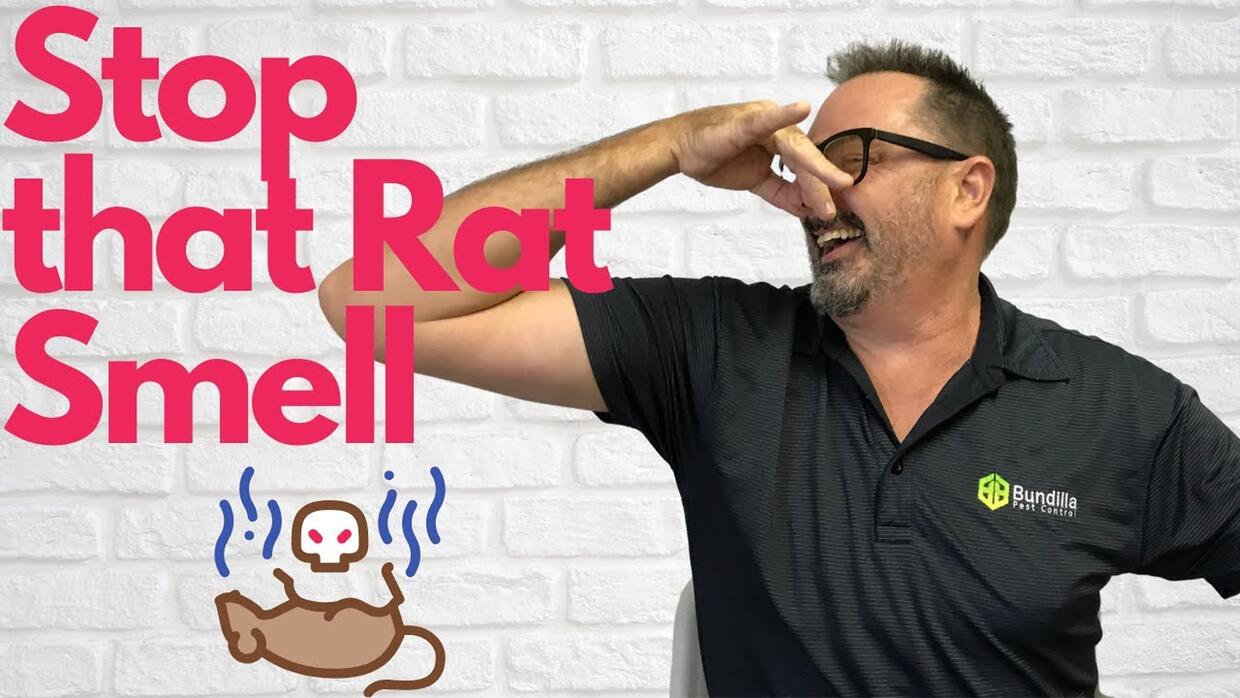
Video: Get rid of that dead rat smell, from Bundilla Pest Control.
How a dead rodent call runs in Fort Lauderdale
The carcass comes out first, and the sealing that stops the next one is quoted beside it.
-
Free inspection and smell walk
Whoever attends walks the house by smell and fly activity, checks the attic side first, and uses a camera through an outlet where the location is uncertain.
-
Access and removal
The carcass is retrieved from the attic where possible, or through a small cut sized to the job, and bagged with the nest and any soaked insulation.
-
Deodorize and treat
An enzyme or oxidizing deodorizer goes onto the cavity and framing, and the maggots and flies that followed the carcass are treated.
-
Close the access
The cut is closed and patched, or the patch is handed to a finishing trade with that stated on the quote so nothing is left open.
-
Exclusion and trapping
The eave course, soffit returns and vents are closed with metal and snap traps go on the runs, because the colony that lost one animal is still there.
Why Fort Lauderdale homeowners route dead rodent calls through us
The carcass is found before anything is cut, the sealing is quoted beside the removal, and the trapping contractor's license is checkable.
Found before it is cut
The contractor we route narrows the location by smell, flies and the attic side before opening any finished surface, and confirms it with a camera where the smell is spread across rooms. That matters because a carcass after a bait plan is on a predictable clock: the EPA describes death from most anticoagulant rodenticides as typically arriving four days to two weeks after feeding starts, which puts the animal near its nest, over a ceiling or at the top of a wall.
EPA: anticoagulant rodenticides typically kill 4 days to 2 weeks after feeding begins
Removal priced apart from the sealing
The inspection is free and the quote shows the carcass removal, the patch, the exclusion and any trapping on separate lines, so the number for the smell can be compared with another bid on its own. National cost data from HomeGuide 2026 puts dead rodent removal between $150 and $500 for a typical job, with the spread set by whether the animal is reachable from the attic or needs a cut in drywall.
HomeGuide 2026: dead rodent removal $150 to $500 nationally
Trapping instead of a second bait round
After a carcass, the survivors get trapped instead of baited again, because UF/IFAS notes that trapping reduces the risk of a poisoned rat dying inside a building and a second bait round is a second carcass waiting to be found. Any contractor we route for trapping holds the FDACS Limited Commercial Wildlife Management certificate at minimum, and where any rodenticide is involved, a pest control business license with a certified operator. The number is checkable with FDACS before the visit.
UF/IFAS: trapping reduces the risk of a poisoned rat dying inside a building
What Reddit Says About Dead Rodent Removal in Fort Lauderdale
Dead-animal smell in a wall is one of the fears that drives its own searches in the r/pestcontrol and r/homeowners threads, and the people posting about it are almost always describing the aftermath of a bait plan. Their advice on picking a company is the same as for any rodent job: several bids for the identical scope, a quote broken into separate lines, a local operator over a national brand, and a straight answer to whether the company does the repair work or only the trapping. Paying around $75 for an inspection just to get a bid is a common complaint.
The red flags they name start with the poison. A company that says the bait makes rats thirsty so they go outside to die is treated as dishonest, and a poison-only plan with no sealing is the single most criticized practice in the corpus. So are quotes that fold a monthly monitoring contract into the removal number, companies that keep returning for months with nothing changing, and the two opposite mistakes: sealing with animals still inside so they end up in the walls, and trapping with nothing sealed, which one commenter called harvesting rodents.
The questions they tell each other to ask carry straight over to a carcass call: what exactly is included and what is a separate line item, will you clean and decontaminate or only trap, how many follow-up visits are included, is the sealing warrantied and does the warranty renew, and what happens if they come back. The Florida threads add the palm fronds and barrel tile eaves as the way in, and the emotional register is heavy: sleep lost to the noise, then a house that smells wrong, and friends who say it is being exaggerated.
Every contractor we route is expected to answer that list in writing, with the removal and the sealing on separate lines.
A typical dead rodent call in a Fort Lauderdale townhouse row
The situation: An owner in a two-story townhouse off Federal Highway had a company put bait in the attic during a December cool snap after scratching over the upstairs hallway. The scratching stopped after about a week. Ten days later a sweet, heavy smell fills the hallway whenever the air conditioning runs, there are slow flies at the landing window, and the neighbor on the other side of the party wall has started to notice it too.
What gets done: Whoever attends walks both sides of the wall by smell, finds the flies concentrated at a ceiling fixture on the landing, and reaches the bay from the shared attic above without cutting drywall. The carcass, a nest and a patch of soaked fill come out in a sealed bag, the bay and the top plate are treated with an oxidizing deodorizer, and the flies are treated. The attic above the row is open at a soffit return and at the tile eave, so exclusion and trapping go on the quote as separate lines, addressed to the association since the attic is shared.
How it turns out: The smell is gone from both units within two days and the flies stop. The board approves the eave closure and soffit screening along the row, the traps take two more animals over the following week and then go quiet, and the owner keeps the written record beside the license number of the company that set the bait.
Dead rodent questions from Fort Lauderdale homeowners
These are the questions that arrive with the smell, usually a week or two after somebody put bait down.
Finding and removing it
How do you find a dead rat in the wall?
By smell first, then by the flies, then with a camera. The smell is strongest closest to the carcass and stronger when the air handler runs, so a room-by-room walk narrows it to a wall or a ceiling bay. Large slow flies gather at the nearest window, outlet or fixture, which usually names the bay. Where doubt remains, an inspection camera through an outlet or a pilot hole confirms it before anything is cut. In a single-story Fort Lauderdale house the carcass is often reachable from the attic side with no cut at all.
Can I leave a dead rat in the wall?
A carcass left in a wall dries out over several weeks and the smell fades, so leaving it is possible. What stays behind is the fluid soaked into the drywall and insulation, the maggots and flies that followed it, and the open eave that let the animal in. In a hot Fort Lauderdale summer the peak is worse and the flies arrive faster, and in a townhouse the neighbor on the other side of the party wall shares the wait. Removal and a treated cavity end the smell within a day or two.
Will you have to cut a hole in my wall?
Only when the carcass cannot be reached from the attic. Ceiling bays and the tops of walls in a single-story house are usually open to the attic, and the contractor we route checks that side first. Where a cut is needed, it is made at the point of strongest smell, sized to the job, and patched afterward, with the finishing either on the quote or named as a separate trade so you know before the saw comes out. Ask that question before agreeing to any price.
Poison and what comes next
Will the smell come back?
The smell from a removed carcass does not return once the cavity has been treated. A smell that returns weeks later is a new carcass, which means the colony is still in the attic and the eave is still open. That is why the removal is quoted beside exclusion and trapping: the eave course, soffit returns and vents get closed with metal against the quarter-inch rat-proofing standard that UF/IFAS gives, and snap traps take the survivors so nothing else dies in a wall.
Should I stop using bait after this?
In an attic, yes, and the reason is the one you have just lived through. The EPA describes most rodenticides as anticoagulants that kill four days to two weeks after feeding begins, and a roof rat spends that time going back to its nest inside the house. As UF/IFAS puts it, trapping lowers the odds of a poisoned animal ending up dead inside the walls. Where a licensed operator does use bait, it goes in a tamper-resistant station under label rules, and second-generation anticoagulants are restricted to those stations in residential settings.
Still have a question? Call (954) 790-6402 and ask.

Book a free inspection for a dead rodent in Fort Lauderdale
Call (954) 790-6402 or send the form. The phone is answered at any hour, the inspection is free, and the removal is quoted apart from the sealing.